
Introduction: Why Privacy Matters More Than Ever The internet has become central to nearly every part of our lives, from banking and shopping to comm
Introduction: Why Privacy Matters More Than Ever
The internet has become central to nearly every part of our lives, from banking and shopping to communication and entertainment. But with this convenience comes a cost: the growing risk to personal privacy.
By 2025, the threat landscape has intensified. Data breaches exposed over 1.8 billion records worldwide in 2024, showing just how vulnerable digital information has become. In response, 60% of internet users have increased their use of privacy tools since 2023.
As Gary Kovacs, former Mozilla CEO, once warned: “Privacy is not an option, and it shouldn’t be the price we accept for just getting on the internet.”
What Online Privacy Really Means in 2025

What Online Privacy Really Means in 2025
Online privacy is about protecting personal data from unauthorized access, surveillance, or misuse. It includes everything from keeping your browsing habits secure to ensuring sensitive details like banking information and medical records are not exposed.
In 2025, privacy is no longer just a technical issue – it is a human right. Elizabeth Denham, the former UK Information Commissioner, emphasized this when she said: “Data privacy is a human right, not a privilege.”
Common Threats to Your Online Privacy
To protect yourself, you first need to understand the risks:
- Data breaches: Hackers target companies to steal customer data.
- Phishing attacks: Fake emails and websites trick people into revealing personal information.
- Tracking and surveillance: Advertisers, apps, and even governments collect user behavior data.
- Weak passwords: Reusing passwords across multiple sites makes accounts easy to hack.
- Public Wi-Fi risks: Unsecured networks can expose your browsing and login details.
Essential Tools for Online Privacy in 2025
Virtual Private Networks (VPNs)
VPNs encrypt your internet connection, hiding your activity from hackers and ISPs. Modern VPNs in 2025 offer faster connections and enhanced security features.
Password Managers
With so many accounts, using a password manager is essential. These tools create and store complex, unique passwords for every site.
Two-Factor Authentication (2FA)
Adding an extra step to your login process makes it much harder for attackers to access accounts.
Secure Browsers and Extensions
Privacy-focused browsers like Brave or Firefox, combined with ad-blockers and anti-tracking extensions, reduce exposure to surveillance.
Encrypted Messaging Apps
Apps like Signal and WhatsApp use end-to-end encryption to ensure only you and your recipient can read messages.
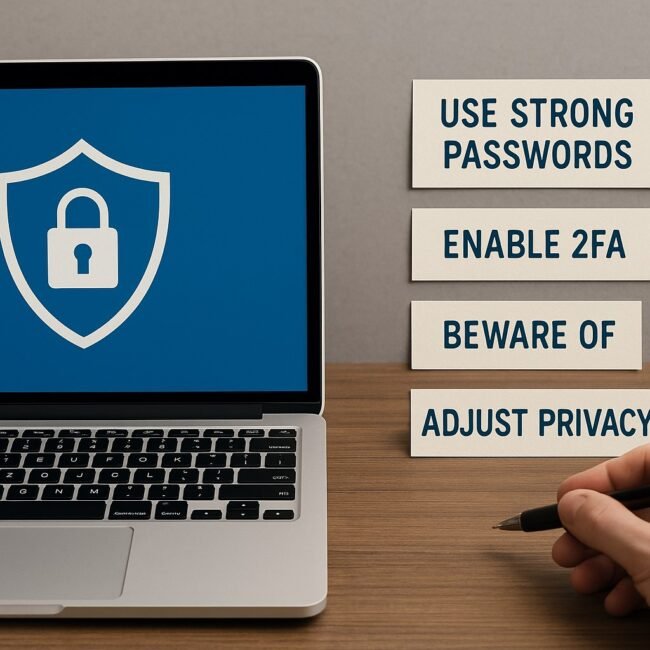
Practical Habits to Protect Your Privacy
Practical Habits to Protect Your Privacy
Update Software Regularly
Outdated software is a hacker’s best friend. Updates patch vulnerabilities and strengthen defenses.
Be Cautious with Public Wi-Fi
Avoid logging into sensitive accounts on public networks unless you are using a VPN.
Limit Data Sharing
Think twice before sharing personal details on social media. Oversharing makes you a target for scams.
Review App Permissions
Regularly check which apps have access to your contacts, photos, or location. Revoke anything unnecessary.
Use Disposable Emails for Sign-Ups
Temporary email services help reduce spam and protect your primary inbox.
The Role of Governments and Companies in Privacy Protection
The Role of Governments and Companies in Privacy Protection
While individuals must take action, governments and companies also play a role. Regulations like the EU’s GDPR and California’s CCPA have set new standards for data protection. Many companies now advertise privacy as a core feature, competing on trust as much as on functionality.
However, enforcement varies by region, and consumers cannot rely solely on laws or corporations. Personal responsibility remains key.
The Future of Online Privacy Beyond 2025
Looking ahead, privacy will become an even bigger focus as technology evolves:
- AI-driven tracking: More sophisticated profiling techniques will demand stronger defenses.
- Quantum threats: As quantum computing matures, new encryption methods will be needed.
- Decentralized identity systems: Blockchain-based IDs may give users more control over their data.
- Cultural shifts: Consumers will increasingly demand transparency and accountability from tech companies.
Conclusion: Taking Control of Your Digital Life
The risks to online privacy are real, but so are the solutions. With data breaches impacting billions of records and 60% of users already adopting privacy tools, it is clear that digital self-defense has become mainstream.
Gary Kovacs was right to insist that “Privacy is not an option, and it shouldn’t be the price we accept for just getting on the internet.” Elizabeth Denham’s reminder that “Data privacy is a human right, not a privilege” should guide how individuals, companies, and governments approach the digital future.
In 2025, protecting your online privacy is not about paranoia – it is about empowerment. By adopting the right tools and habits, you can safeguard your data and reclaim control over your digital life.

COMMENTS