

Introduction: Why Cybersecurity Careers Matter in 2025 The digital economy is expanding faster than ever, and with it comes a sharp rise in cyber thr
Introduction: Why Cybersecurity Careers Matter in 2025
The digital economy is expanding faster than ever, and with it comes a sharp rise in cyber threats. Every day, businesses, governments, and individuals face risks ranging from phishing attacks to ransomware campaigns. This makes cybersecurity one of the most vital industries in the world.
In 2025, demand for cybersecurity professionals is exploding. According to workforce research, demand for cybersecurity professionals is expected to grow 33% through 2030. At the same time, there will be over 3.5 million cybersecurity job openings globally in 2025.
This combination of growth and shortage makes cybersecurity one of the best career paths for anyone entering or transitioning into the tech industry.
What Does a Cybersecurity Career Involve?
Cybersecurity is about protecting digital systems, networks, and data from attacks. Professionals in this field handle tasks such as:
- Monitoring systems for intrusions
- Identifying and fixing vulnerabilities
- Conducting penetration testing and ethical hacking
- Managing data protection and compliance requirements
- Training employees on cyber hygiene
As Mikko Hyppönen, a renowned cybersecurity expert, explained: “Cybersecurity is a journey, not a destination.” This reflects the fact that threats are constantly evolving, and cybersecurity careers involve continuous learning and adaptation.
Skills You Need for a Cybersecurity Career in 2025

Skills You Need for a Cybersecurity Career in 2025
If you want to succeed in cybersecurity, certain technical and soft skills are essential.
Core technical skills include:
- Networking fundamentals: Understanding TCP/IP, firewalls, and protocols.
- Programming knowledge: Languages like Python, Java, or C++ for scripting and automation.
- Operating systems expertise: Familiarity with Linux, Windows, and macOS.
- Cloud security: Protecting AWS, Azure, and Google Cloud environments.
- Incident response: Managing and mitigating breaches.
Soft skills are equally important:
- Analytical thinking for threat detection
- Communication skills for explaining risks to non-technical teams
- Problem-solving under pressure
- Continuous curiosity for new tools and threats
Theresa Payton, former White House CIO, summed this up well: “The best defense is a well-educated workforce.”
Certifications That Open Doors in Cybersecurity

Certifications That Open Doors in Cybersecurity
Certifications remain the fastest way to prove your expertise to employers. Popular options in 2025 include:
- CompTIA Security+: Great for beginners.
- Certified Ethical Hacker (CEH): Focuses on penetration testing and hacking skills.
- Certified Information Systems Security Professional (CISSP): Advanced, management-focused certification.
- Certified Cloud Security Professional (CCSP): For cloud infrastructure defense.
- Google Cybersecurity Certificate: A newer but recognized option for entry-level candidates.
Employers value certifications because they standardize skills and reduce hiring risk.
Career Paths in Cybersecurity
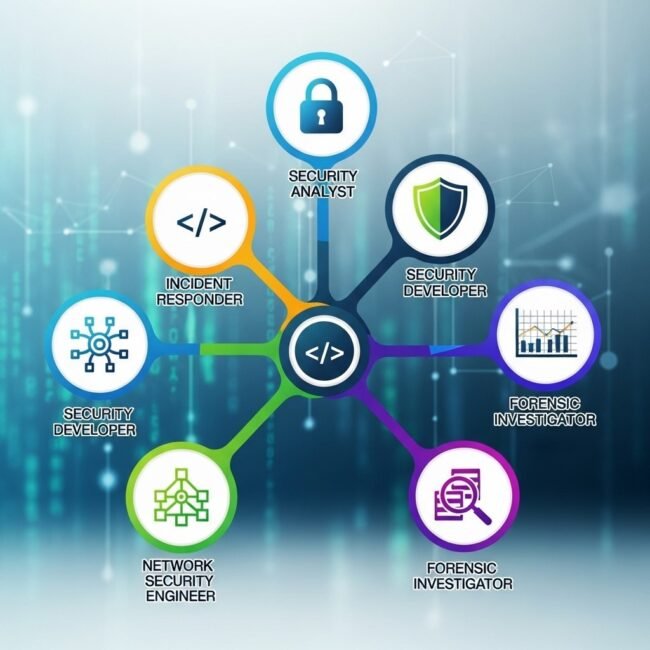
Career Paths in Cybersecurity
There is no single role in cybersecurity. The industry offers diverse career paths, depending on your interests:
- Security Analyst: Entry-level role monitoring and responding to incidents.
- Penetration Tester: Ethical hacker testing defenses.
- Security Engineer: Builds secure systems and networks.
- Incident Responder: Handles breaches in real time.
- CISO (Chief Information Security Officer): Senior executive overseeing enterprise security.
With the projected 3.5 million open jobs in 2025, there will be opportunities at every level, from entry-level analysts to executives.
Where the Jobs Are in 2025
Cybersecurity careers exist across industries, not just in tech companies. Key sectors hiring aggressively include:
- Finance: Protecting sensitive customer and payment data.
- Healthcare: Safeguarding patient records and critical systems.
- Government: Defending national infrastructure from state-sponsored attacks.
- Retail and e-commerce: Preventing fraud and securing transactions.
- Telecom and IT services: Managing global-scale networks.
Remote work has also expanded opportunities. Many cybersecurity jobs in 2025 allow remote or hybrid work models, giving professionals more flexibility.
The Global Demand for Cybersecurity Professionals
The scale of opportunity is staggering. According to global research:
- Cybersecurity jobs will grow by 33% through 2030, far faster than the average for other professions.
- 3.5 million roles remain unfilled worldwide in 2025, creating huge demand for talent.
For professionals, this means competitive salaries, job security, and global mobility. For businesses, it highlights the urgent need to invest in training and workforce development.
Challenges of Building a Cybersecurity Career
While the opportunities are enormous, building a career in cybersecurity also comes with challenges:
- Constant learning: Threats evolve daily, requiring ongoing training.
- High-pressure environments: Responding to breaches often means long hours.
- Certification costs: Some advanced certifications are expensive.
- Talent competition: The best jobs attract global applicants.
Despite these challenges, the field remains rewarding both financially and intellectually.
The Future of Cybersecurity Careers Beyond 2025

The Future of Cybersecurity Careers Beyond 2025
Looking ahead, cybersecurity careers will become even more integrated into everyday business and government operations.
Trends shaping the future include:
- AI-driven cybersecurity: Defenders will use artificial intelligence to detect and neutralize threats faster.
- Zero-trust security models: Organizations will move away from perimeter defense to continuous verification.
- Cloud-first defense: Cloud environments will become the central battlefield.
- Cyber awareness as culture: As Payton noted, the workforce itself will be the first line of defense, making training more important than ever.
For those entering the field today, these trends mean endless opportunities to specialize and grow.
Conclusion: Why Now Is the Time to Start
Cybersecurity is one of the most future-proof careers you can pursue in 2025. With demand for professionals expected to grow 33% through 2030 and 3.5 million open jobs globally this year, the shortage of skilled defenders has created a unique window of opportunity.
Mikko Hyppönen’s reminder that “Cybersecurity is a journey, not a destination” highlights the dynamic nature of the field. And Theresa Payton’s advice that “The best defense is a well-educated workforce” underscores the importance of continuous learning.
For anyone passionate about technology, problem-solving, and protecting people from digital threats, building a career in cybersecurity in 2025 is not just a smart choice. It is one of the most impactful decisions you can make for the future.

COMMENTS